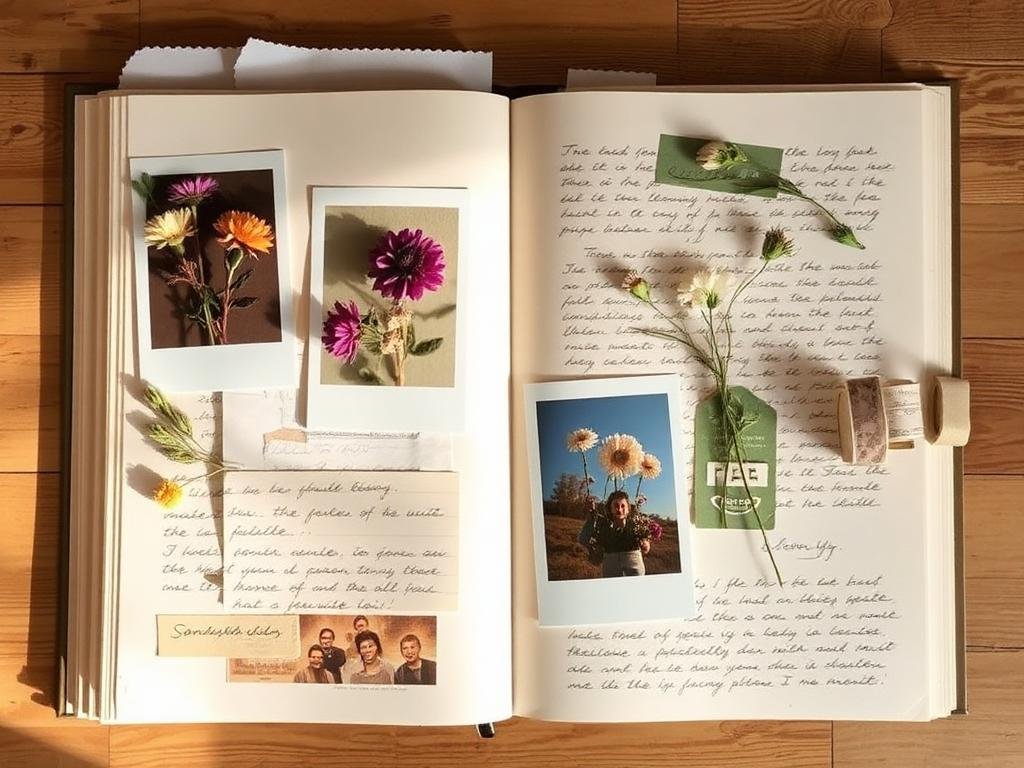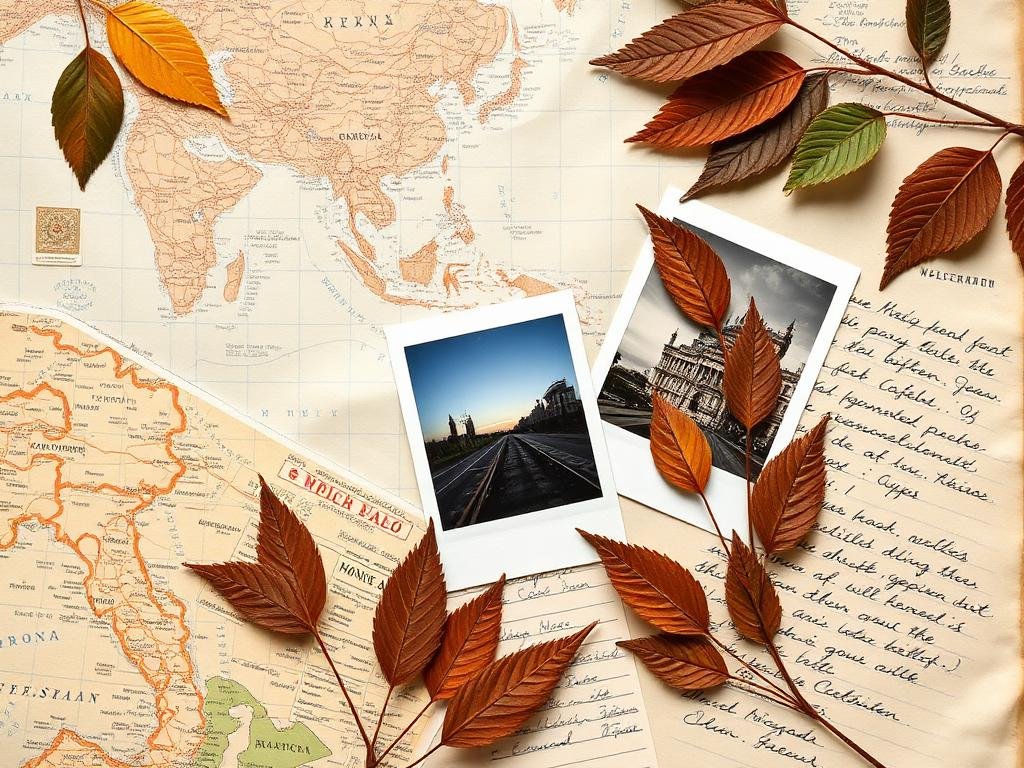
There is a particular kind of magic that happens when a scrapbook page stops looking *new*. The paper softens, the edges curl ever so slightly, and the whole spread starts to feel like something you discovered in your grandmother’s attic. That feeling is almost always the result of a few small, deliberate techniques layered together.
Start with a base of tea-stained cardstock. Brew a strong cup of black tea, let it cool, and brush it across cream cardstock with a wide flat brush. Let it pool in the corners. The unevenness is the point.
Layer your patterned papers torn — never cut — at the edges. A torn edge catches the light differently and reveals the paper’s core, which most archival papers leave a slightly different shade.
Use real ephemera wherever you can. A real train ticket, a real pressed flower, a real postage stamp — these add tactile weight that printed substitutes never quite match.
Finish with a single handwritten line. Not a caption, not a title — a sentence. ‘It rained the whole afternoon and we didn’t mind.’ Your future self will thank you.